
For event planners, AV system integrators, and stage rental companies, purchasing a fleet of rental LED displays is a major capital investment. Choosing the wrong specification leads to critical on-site failures—such as screens washing out under direct sunlight, complex rigging systems causing installation delays, or high dead-pixel rates that disrupt premium live events.
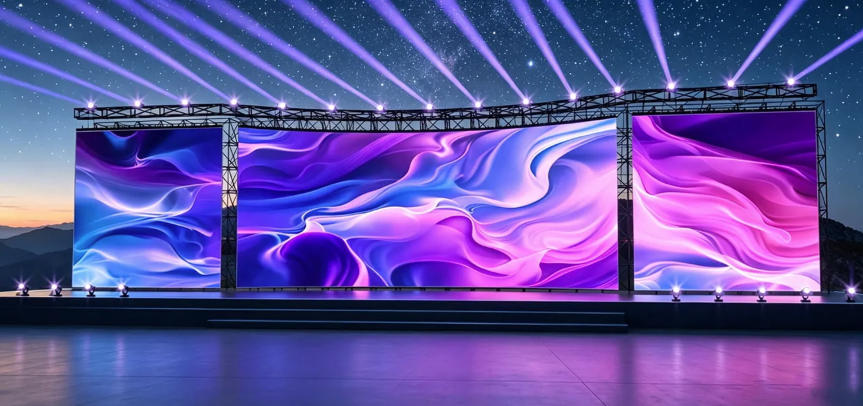
When expanding a rental inventory, the primary decision lies between Indoor and Outdoor Rental LED Displays. While these panels look identical structurally, their internal engineering, mechanical designs, and environmental tolerances differ significantly.
This guide breaks down the critical technical and structural differences to help ensure equipment reliability, optimal performance, and predictable ROI.
1. Environmental Protection: IP Rating & Weatherproofing
The primary differentiator between indoor and outdoor rental fleets is environmental resilience.
-
Outdoor Rental LED Displays:These require an IP65 rating or higher(front and rear). They are built with fully sealed modules, waterproof glue-injection (conformal coating) across the PCBs, and waterproof power/signal connectors (such as Neutrik powerCON and etherCON). This construction withstands rain, high humidity, and dust.
-
Indoor Rental LED Displays:Typically rated at IP30. They feature open-ventilation back covers for heat dissipation and lack waterproof sealing. Operating an indoor panel outdoors—even under a temporary canopy—is high risk; ambient moisture or unexpected condensation can cause short circuits.
2. Optical Performance: Brightness & Pixel Pitch Balance
Achieving visual impact requires balancing pixel density and luminance, which is dictated by the operating environment.
| Technical Parameter | Indoor Rental LED Display | Outdoor Rental LED Display |
| Brightness | 800 to 1,200 nits | 4,500 to 7,000 + nits |
| Common Pixel Pitch | P1.9, P2.5, P2.6, P2.9 | P2.9, P3.9, P4.8 |
| Viewing Distance | Short 2 to 8 meters | Long 6 to 30 + meters |
Brightness Requirements
Outdoor screens must compete with direct ambient sunlight, which sits around 10,000 nits . An outdoor Stage LED Screenrequires a minimum of 4,500 nits to remain visible.
Conversely, running an outdoor screen indoors at full brightness will cause severe glare for the audience. Reducing the brightness manually on an outdoor screen can degrade the Greyscaleand color depth unless the panel utilizes specialized driver ICs. Indoor panels are engineered to deliver full 16-bit greyscale even at low brightness levels (800 nits).
Pixel Pitch (P) Selection
Indoor applications demand close-up viewing, making a fine pixel pitch like a P2.5 LED Displayor smaller necessary to avoid visible pixelation. Outdoor environments naturally offer longer viewing distances, allowing for larger pitches (P3.9 or P4.8). This helps control equipment costs without sacrificing perceived image clarity.
3. Cabinet Engineering: Weight, Durability, and Maintenance
In the high-turnaround rental market, labor cost and setup speed dictate profitability. Modern rental fleets rely on die-cast aluminum cabinetsrather than traditional fixed-installation iron cabinets.

Weight & Rigging
Die-cast aluminum offers high structural precision (pm 0.1mm} alignment tolerance) and lightweight handling, typically weighing around 6.5 to 7.5kg per cabinet. However, outdoor cabinets feature extra internal reinforcement, integrated wind-bracing tracks, and heavier fast-locking mechanisms to withstand high wind loads during outdoor rigging.
Standard Die-Cast Aluminum Design
Modular Power Box (Tool-less Detachment)
Ergonomic Carry Handles & Fast-Locks
Reinforced Corner Protectors (Anti-Collision)
Maintenance Access
-
Indoor Fleet:Often features front-serviceabilityvia magnetic tools. This allows technicians to replace a single module from the front of the stage setup within seconds without dismantling the structural grid.
-
Outdoor Fleet:Typically relies on a rear-maintenanceor dual-maintenance design. Back covers utilize secure thumb-screws or latch locks to maintain the IP65 waterproof seal while providing access to the receiving cards and hub boards.
4. Driving Power & Refresh Rates
Premium corporate events, concerts, and live broadcast studios demand clean camera capture.
Whether sourcing indoor or outdoor panels, professional B2B buyers must specify a Refresh Rate of 3,840Hz utilizing high-end driving ICs (such as Macroblock or Chipone). This eliminates flickering, black scanning lines, and color ghosting when filmed by professional TV cameras or smartphones.
Additionally, premium indoor rental options utilizing COB (Chip-on-Board)or SMD with common-cathode power architecturehelp reduce heat generation, prolong diode life, and lower the overall dead-pixel rate during frequent transport and installation transitions.
Summary Checklist for Inventory Procurement
To optimize inventory procurement strategy, utilize the following selection criteria:
-
Deploy Indoor Rental Screens For:Corporate keynotes, indoor auto shows, TV studios, exhibition booths, or high-end weddings where the viewing distance is tight and close-up photography is required.
-
Deploy Outdoor Rental Screens For:Music festivals, outdoor stadium events, political rallies, or public square digital signage where weather exposure is guaranteed and high sunlight readability is necessary.
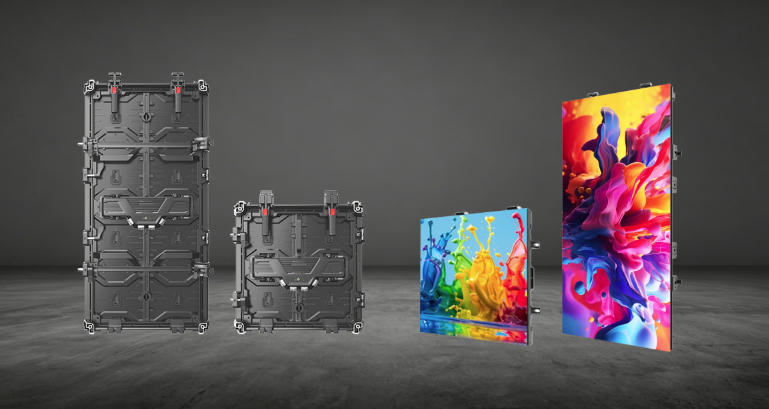
Master Series Indoor&Outdoor Rental LED Display
Sourcing Options with Tang Vision
Investing in the right rental inventory requires factory-level customization to match existing operational systems. Tang Vision manufactures road-tested indoor and outdoor rental LED displays engineered for structural durability, rapid assembly, and color fidelity.
To expand AV rental business infrastructure or upgrade staging inventory this quarter, contact our engineering team to receive detailed technical specifications, request product factory test video data, or obtain a factory-direct quotation.